
Zero Tolerance for Cap Flash | APEX High-Precision Parting Line Machining Standards
7 2026/5
Zero Tolerance for Cap Flash | APEX High-Precision Parting Line Machining Standards
The Flash Problem That Undermines Cap Quality
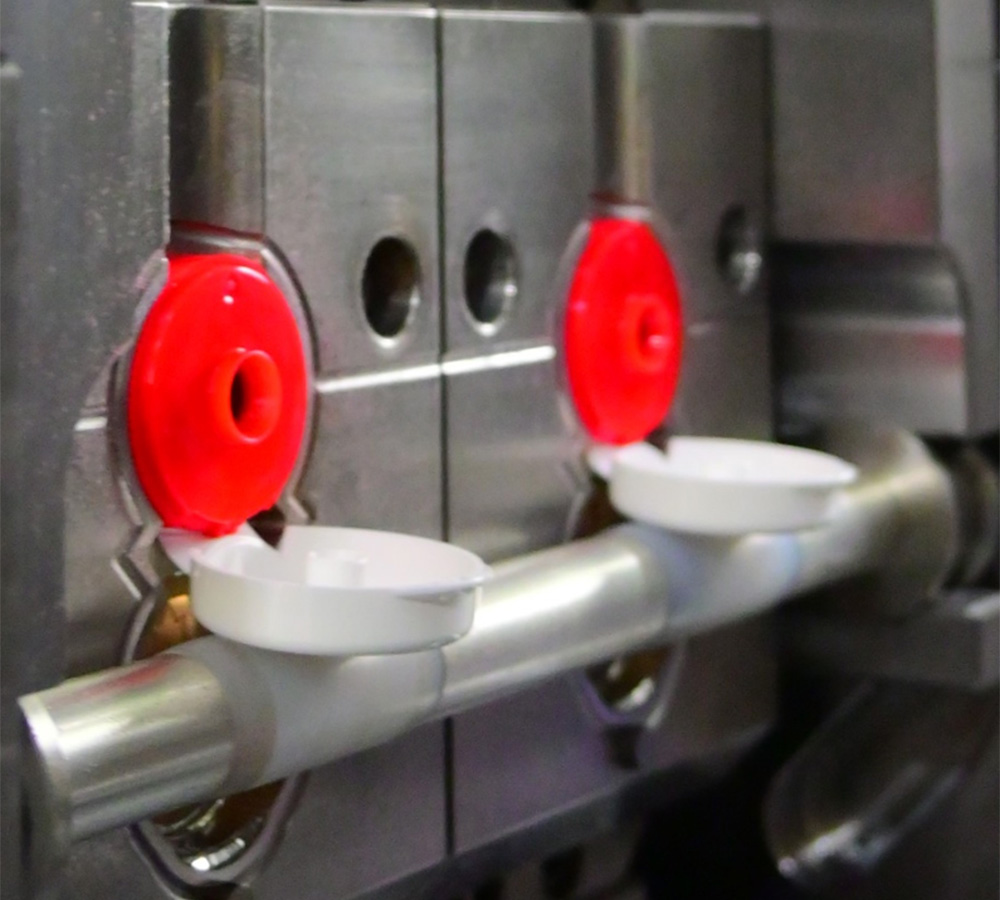
Cap mold flash represents far more than a cosmetic nuisance, creating sealing surface irregularities that compromise closure integrity, generating loose particles that contaminate product contact surfaces, forcing costly secondary deflashing operations, and accelerating mold wear at parting line edges where flash repeatedly forms and breaks away, and APEX has established absolute zero-tolerance standards to eliminate this quality threat entirely from the closure manufacturing process.
Why Flash Forms at the Parting Line
Flash formation during cap injection molding occurs when molten polymer penetrates the microscopic gap between mating mold halves under injection pressure, filling any clearance created by imperfect surface flatness, insufficient clamping force relative to cavity pressure, localized parting line wear, or thermal distortion that opens clearances during high-temperature production conditions, and APEX precision machining standards systematically eliminate each of these potential root causes.
APEX Parting Line Surface Specification
APEX imposes exacting surface flatness specifications across all parting line surfaces, with maximum deviation tolerances measured in single-digit microns across the entire mating plane, achieved through precision surface grinding on high-rigidity machining platforms, followed by hand lapping procedures where required, and verified through optical interferometry inspection that maps the entire parting surface topology before mold assembly authorization.
Perfect Alignment Through Precision Guiding Systems
Even perfectly flat surfaces will flash if mold halves shift laterally under injection pressure, and APEX incorporates precision-ground leader pins, tapered interlock systems, and hardened alignment bushings that maintain perfect parting line registration across every mold closing cycle, with verified alignment repeatability within micron tolerances that ensures cavity edges match precisely every single time the mold closes for production.
Thermal Stability Protecting Parting Line Integrity
Temperature fluctuations during production cycling cause thermal expansion and contraction that can temporarily alter parting line clearances, and APEX addresses this through strategic cooling channel placement along parting surfaces, uniform mold base temperature control, and material selection for mold plates with matched thermal expansion coefficients, maintaining consistent parting line contact conditions across cold starts, steady-state production, and all thermal transitions between these operational states.
Edge Preservation Through Premium Material Selection
Parting line edges endure concentrated mechanical stress during every mold closing cycle, and APEX constructs these critical surfaces from premium DIN 1.2344 and 1.2316 tool steels with optimal hardness levels and sufficient toughness to resist edge chipping, peening, and progressive rounding that gradually increases flash formation over extended production periods measured in millions of cycles.
Cavity Pressure Management for Flash Prevention
Excessive injection pressure or localized pressure spikes during filling can force open even perfectly matched parting lines, and APEX balances cavity fill sequences, optimizes gate dimensions to reduce required injection pressure, and positions cavities symmetrically around the mold center to equalize clamping force distribution, maintaining parting line closure integrity within the machine's tonnage capacity throughout every filling cycle.
Venting Design That Channels Without Flashing
Proper mold venting is essential for air evacuation during filling yet must prevent polymer penetration, and APEX engineers parting line vents with precise depth specifications, strategic placement at last-to-fill locations, and graduated channel profiles that allow complete air escape while maintaining land dimensions too narrow for molten polymer flow at injection pressures, achieving perfect venting without vent flash formation.
Multi-Stage Parting Line Inspection Protocol
APEX implements a rigorous multi-stage parting line inspection protocol beginning with individual plate flatness verification, continuing through assembled mold closure confirmation under simulated clamping conditions, extending to actual molding trials with flash-sensitive colored resin for visual detection, and concluding with microscopic examination of cap sample parting line regions at specified magnification to confirm zero-flash performance.
Pre-Delivery Flash Performance Validation
Every APEX cap mold undergoes comprehensive flash performance validation before shipment, including production of sample caps at specified cycle rates, visual inspection under standardized lighting by trained quality personnel, microscopic examination of parting line regions, and sealing surface flatness verification on sampled caps, with complete documentation confirming zero-flash performance across all cavities and all cycle conditions tested.
Sustained Flash-Free Performance Across Mold Life
APEX parting line standards are engineered for sustained flash-free performance over the mold's entire operational lifespan, with wear-resistant edge materials that maintain sharp corners, robust guiding systems that preserve alignment accuracy, and comprehensive maintenance documentation that specifies inspection frequencies, acceptable wear limits, and restoration procedures should any parting line degradation eventually occur.
The Cost of Flash Versus The Value of Precision
Flash-related costs accumulate insidiously through increased scrap rates, secondary trimming labor, quality inspection time, customer rejections, and accelerated mold maintenance requirements, and APEX zero-tolerance parting line standards eliminate these costs at their source through precision machining investment that delivers sustained long-term value substantially exceeding the incremental manufacturing expense of achieving micron-level parting surface quality.
Application-Specific Parting Line Requirements
APEX tailors parting line specifications to specific cap application demands, with enhanced surface flatness applied to tamper-evident band bridges where residual flash can impede breakaway performance, extra attention to hinge region parting lines in flip-top closures where flash can restrict living hinge flexure, and precision edge definition on sealing plug surfaces where any flash directly compromises leak prevention functionality.
Documentation and Traceability for Parting Line Quality
Every APEX cap mold ships with comprehensive parting line quality documentation including surface flatness measurement reports, alignment verification data, flash performance test results, and recommended inspection procedures for ongoing parting line maintenance, providing customers with verified evidence of flash-free capability and clear standards for monitoring parting line condition throughout the mold's operational service life.
Partner with APEX for Flash-Free Cap Manufacturing
For closure manufacturers who refuse to accept flash as an unavoidable production reality, APEX high-precision parting line machining standards deliver zero-tolerance flash prevention that eliminates secondary operations, protects cap functional integrity, enhances consumer safety through consistent sealing surfaces, and maintains clean, efficient production operations across millions of high-quality cap molding cycles.