
Perfect Wall Distribution, Every Single Preform
4 2026/6
Perfect Wall Distribution, Every Single Preform
The Geometry of Quality in Every Preform
Wall thickness distribution represents the invisible architecture of preform quality, the internal geometry that determines how a preform will stretch during blowing, where material will flow, which regions will thin and which will thicken, and ultimately whether the resulting bottle will possess the mechanical strength, dimensional consistency, and visual uniformity that brands demand, and APEX has made perfect wall distribution in every single preform the central engineering objective around which all mold design and manufacturing decisions revolve.
Why Wall Distribution Determines Everything
When a preform enters a blow molding cavity and begins stretching under high pressure, the material distribution established during injection becomes the sole determinant of final bottle wall thickness, with thin preform regions producing thin bottle regions vulnerable to rupture, thick preform regions producing thick bottle regions adding unnecessary weight and cost, and uneven preform distribution creating bottles with unpredictable mechanical properties that fail under fill pressure, drop impact, or stacking load conditions in real-world distribution environments.
Core-Cavity Concentricity as the Foundation
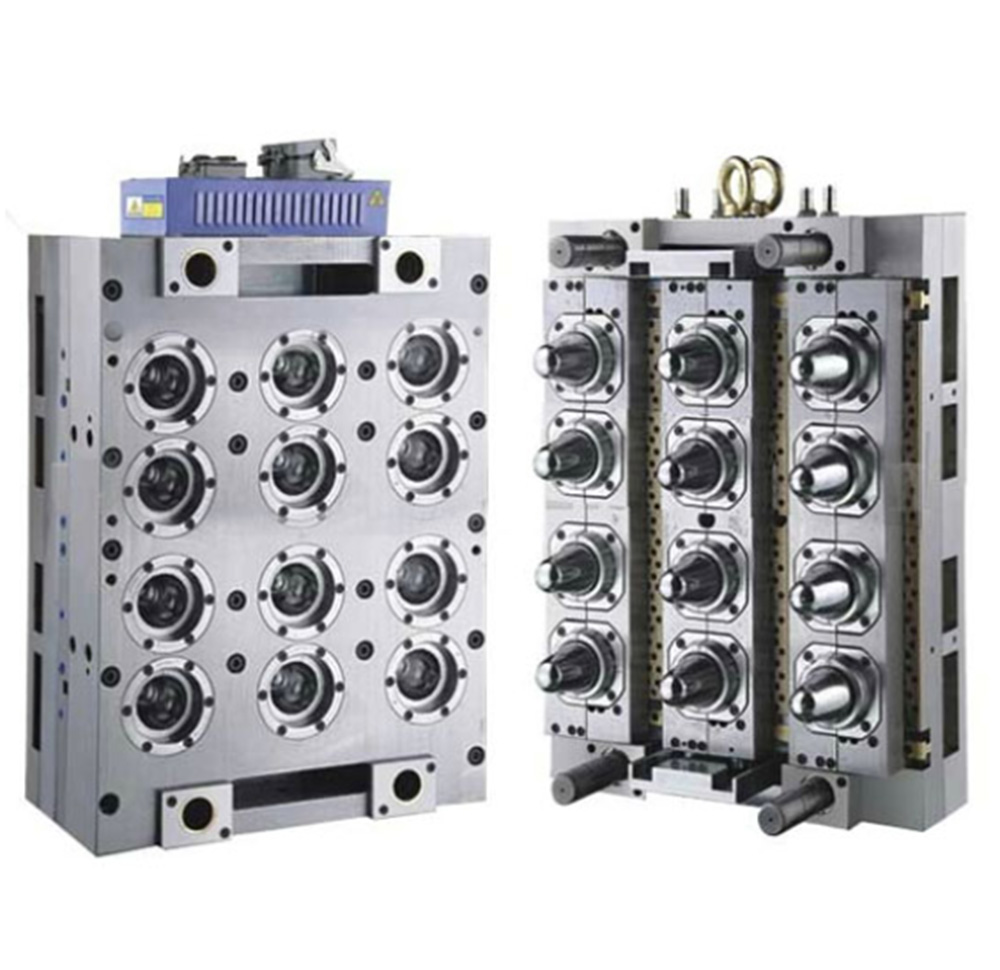
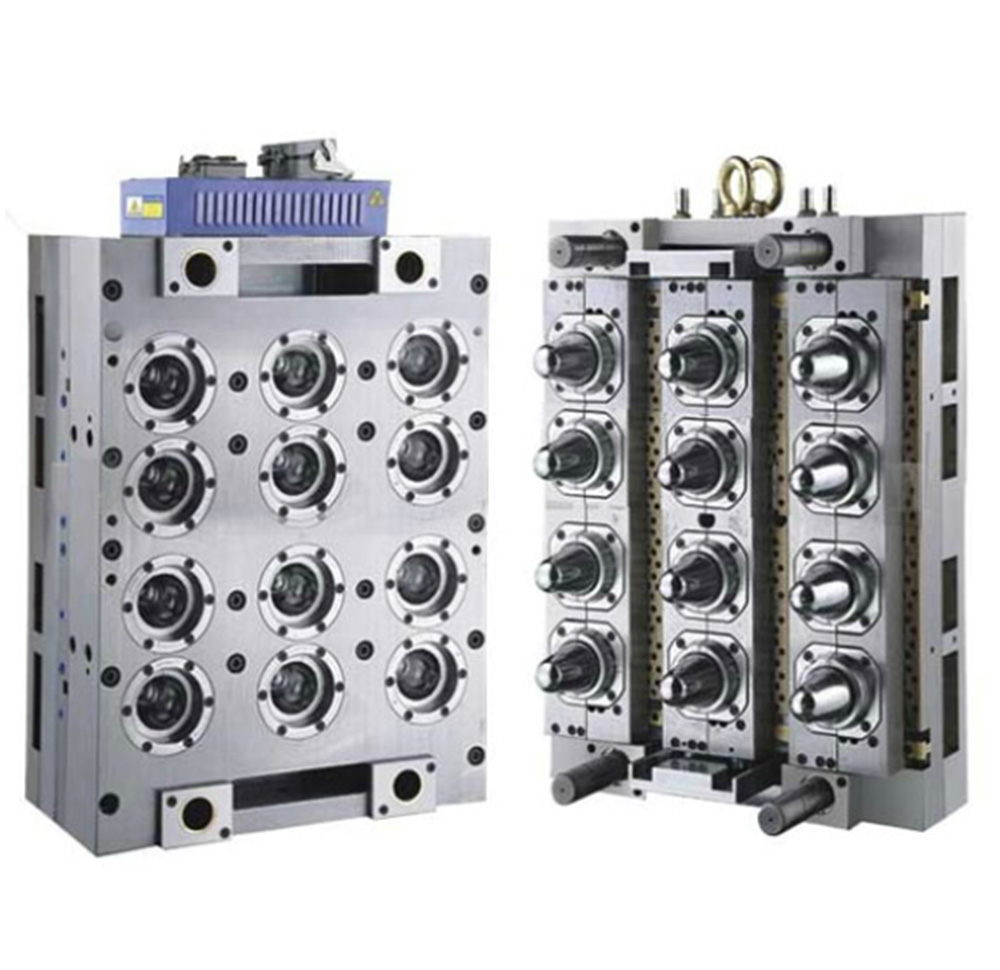
Perfect wall distribution begins with perfect alignment between core and cavity, because any eccentricity between these two critical components produces circumferential wall variation where one side of the preform is thicker than the opposite side, and APEX achieves micron-level concentricity through precision grinding of mold base reference surfaces, individual component inspection on coordinate measuring machines, and assembly verification that confirms alignment accuracy before any preform is ever produced.
Balanced Melt Delivery for Uniform Distribution
Even with perfectly concentric core and cavity, wall distribution will vary if melt enters the cavity with inconsistent temperature, pressure, or flow velocity, and APEX balanced hot runner systems with geometrically identical flow paths to every cavity ensure that each preform receives identical material under identical conditions, eliminating the cavity-to-cavity and cycle-to-cycle variations that produce wall distribution inconsistency in less precisely engineered tooling.
Multi-Point Measurement Validating Distribution Claims
APEX verifies wall distribution perfection through comprehensive multi-point measurement protocols, with preform samples sectioned and measured at multiple circumferential positions along multiple axial locations, generating complete wall thickness maps that confirm uniform material distribution throughout every region of every preform, from gate area through transition zone to neck finish, without thin spots, thick bands, or eccentricity patterns that compromise downstream processing reliability.
Thermal Uniformity Supporting Dimensional Consistency
Wall distribution during molding depends critically on uniform thermal conditions around the entire cavity circumference, and APEX conformal cooling channels maintain identical cooling intensity across all angular positions, eliminating hot-side and cold-side differentials that produce asymmetric shrinkage, differential material accumulation, and wall thickness eccentricity during the critical post-fill cooling phase when preform geometry becomes permanently established.
Gate Geometry's Role in Distribution Patterns
The gate region represents the entry point where melt fills the cavity and establishes initial flow patterns that influence subsequent material distribution, and APEX optimizes gate dimensions, gate land geometry, and gate cooling to ensure smooth, controlled melt entry that produces consistent distribution patterns without the jetting, hesitation, or flow imbalances that create wall variation in the critical gate-adjacent preform regions.
Cavity-to-Cavity Distribution Uniformity
In high-cavitation molds from 32 to 144 cavities, perfect wall distribution must be achieved in every single cavity, not just in a representative sample, and APEX verifies this through individual cavity preform sampling, systematic wall thickness measurement across all cavities, and statistical analysis confirming that distribution patterns remain indistinguishable from cavity one to cavity one hundred forty-four across entire production campaigns spanning millions of cycles.
Application-Optimized Distribution Profiles
Different bottle applications demand different wall distribution profiles, with lightweight water preforms requiring extreme thinning capability in the body section, hot-fill preforms needing specific material accumulation patterns for heat resistance and vacuum absorption, and CSD preforms demanding uniform distribution for consistent pressure retention, and APEX tailors cavity and core geometries to produce the exact distribution profile optimized for each specific application category.
Material-Specific Distribution Optimization
Different PET resin grades exhibit distinct flow and shrinkage behaviors that affect wall distribution, with higher intrinsic viscosity materials flowing differently than lower IV grades, recycled content affecting melt behavior, and specialty resins requiring adjusted processing parameters, and APEX optimizes gate dimensions, cavity geometry, and cooling profiles to match the specific material characteristics of each customer's preferred resin formulation.
The Relationship Between Wall Distribution and Lightweighting
As preform weights decrease to meet sustainability targets, wall distribution precision becomes progressively more critical because thinner walls provide less margin for variation before minimum thickness thresholds are violated, and APEX precision engineering supports aggressive lightweighting initiatives by maintaining tight distribution control that ensures even the thinnest preform regions remain safely above minimum performance specifications.
Cycle-to-Cycle Distribution Consistency
Perfect wall distribution in one cycle provides limited value if subsequent cycles produce different distribution patterns, and APEX maintains cycle-to-cycle consistency through thermal management systems that stabilize cavity temperatures, hot runner controls that maintain consistent melt conditions, and mold construction that preserves core-cavity concentricity without the progressive drift that introduces distribution variation over time.
Pre-Delivery Distribution Validation Documentation
Every APEX preform mold ships with comprehensive wall distribution documentation including sectioned preform measurement reports at multiple axial positions, circumferential thickness graphs at critical locations, cavity-to-cavity variation statistics, and baseline distribution data that establishes the reference standard for ongoing production quality monitoring throughout the mold's operational lifespan.
The Downstream Benefits of Distribution Perfection
Perfect wall distribution in the preform translates directly into downstream benefits including predictable blow molding behavior, consistent final bottle wall thickness, reliable mechanical performance under fill pressure and distribution stress, reduced blowing scrap rates, and enhanced brand protection through the consistent container quality that consumers unconsciously register and trust in competitive retail environments.
Sustained Distribution Quality Across Mold Life
The precision that delivers perfect wall distribution is engineered for permanence, with wear-resistant core and cavity surfaces maintaining original geometries, robust alignment systems preserving concentricity, and comprehensive maintenance documentation specifying inspection frequencies that catch and correct any developing variation before distribution quality is compromised across millions of operational cycles.
Partner with APEX for Distribution Excellence
For preform manufacturers and bottle brands who understand that wall distribution established in the mold determines container quality experienced by consumers, APEX preform molds deliver the engineering precision necessary for perfect wall distribution in every single preform, across every cavity, through every cycle, throughout the complete operational lifetime of the mold.