
Conformal Cooling That Cuts Cycle Time
9 2026/6
Conformal Cooling That Cuts Cycle Time
The Cooling Phase as Productivity's Bottleneck
In PET preform injection molding, cooling time typically consumes the largest single portion of each production cycle, making it the primary bottleneck limiting overall output, and any reduction in this cooling duration translates directly into more preforms produced per shift, per day, and per year from the same mold investment, which is precisely why APEX has invested deeply in conformal cooling technology that accelerates heat extraction without sacrificing the dimensional stability, surface quality, or optical clarity essential to premium preform production.
What Makes Cooling Conformal
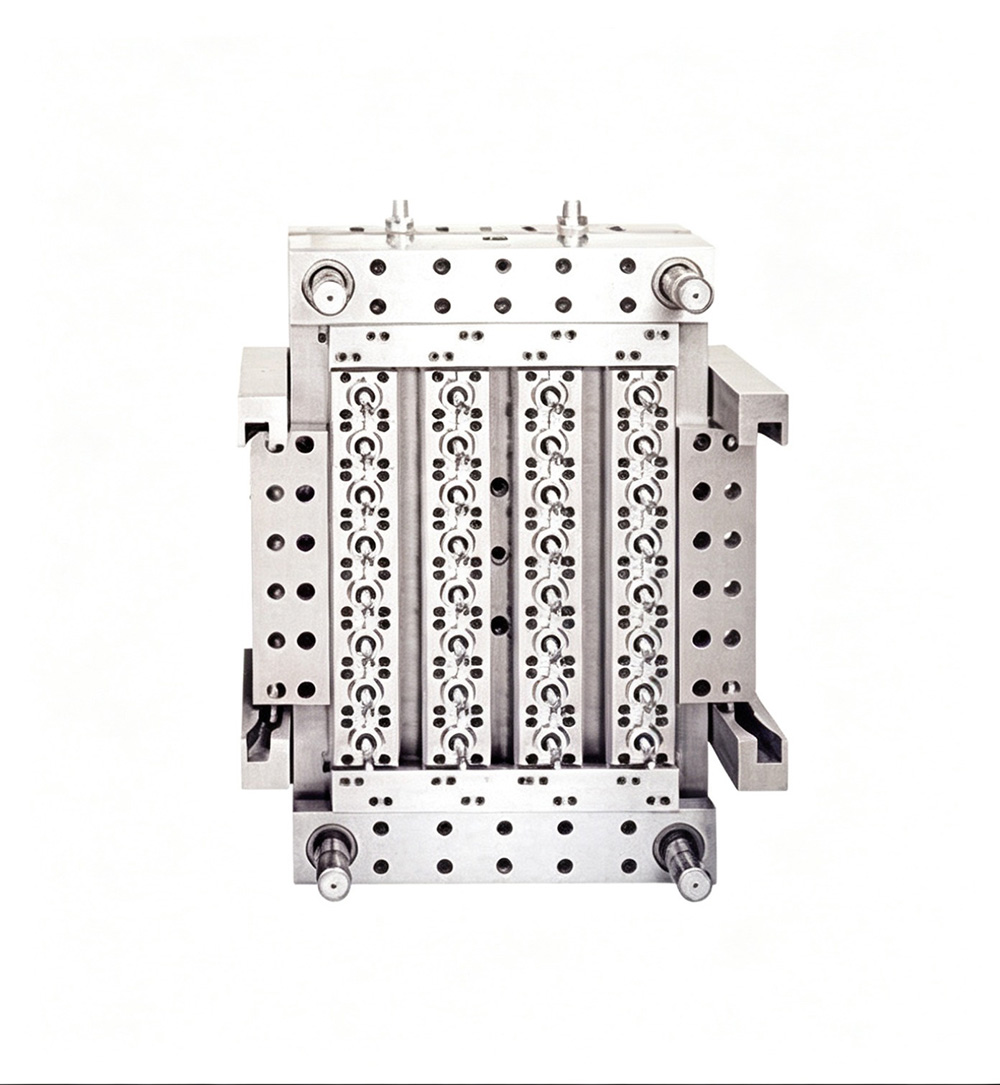
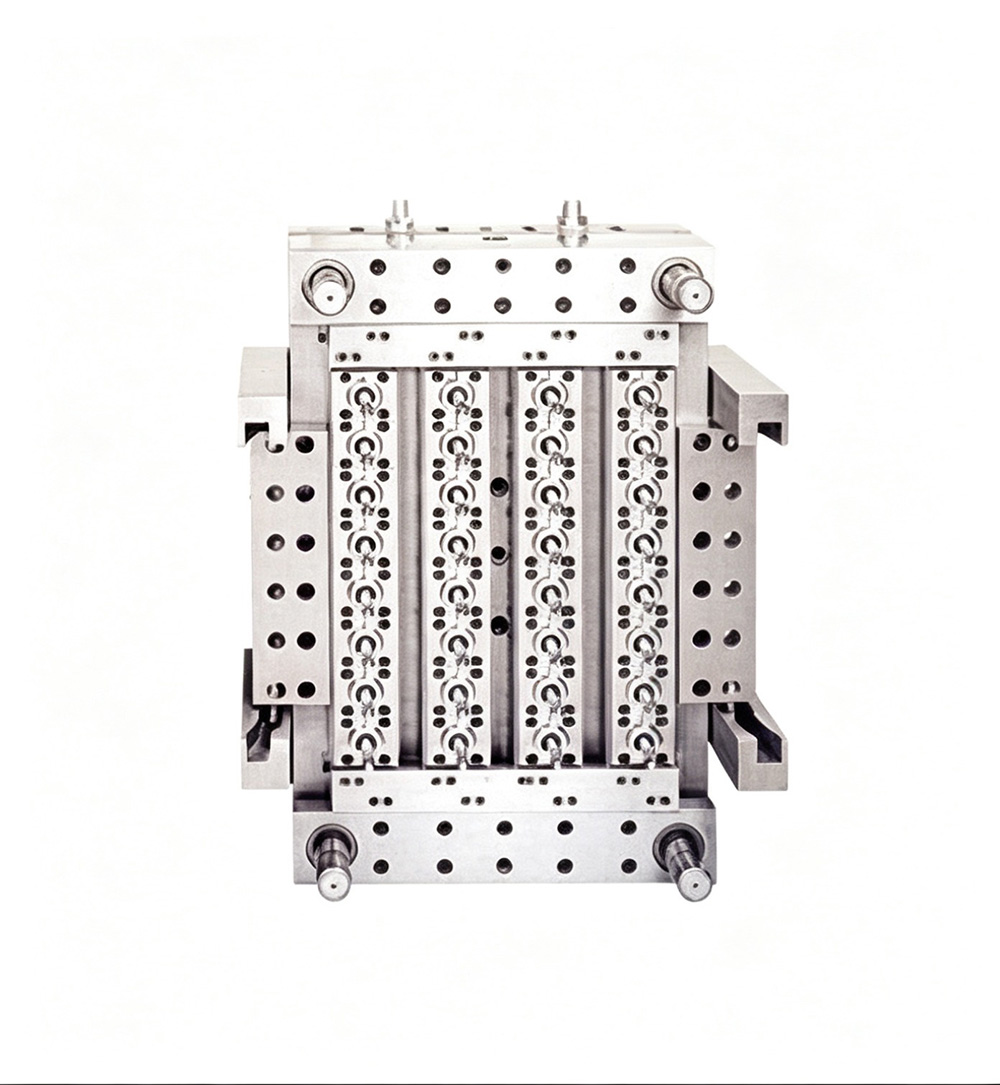
Conventional cooling channels are straight-drilled holes that create unavoidable distance variations from cavity surfaces, producing uneven heat extraction where some cavity regions cool rapidly while others remain hot, but APEX conformal cooling channels follow the precise three-dimensional contour of the preform cavity profile, maintaining uniform distance between channel and cavity surface throughout the entire preform length, eliminating hot spots in thick-walled regions, and delivering consistent thermal extraction across every square millimeter of cavity surface area simultaneously.
The Physics of Faster Heat Removal
Conformal cooling accelerates cycle time through fundamental thermal physics advantages: reduced distance between cooling medium and cavity surface shortens the conduction path for heat exiting the polymer, uniform channel proximity prevents hot spots that extend required cooling duration, and increased cooling surface area coverage extracts heat from more cavity surface simultaneously, with these three mechanisms combining to achieve documented cycle time reductions of up to 15 percent compared to conventionally cooled mold designs processing identical preform geometries.
Beryllium Copper: Thermal Superhighways in Critical Zones
In regions of highest thermal intensity including the gate area where hot melt first enters, the neck ring zone with its thick material section, and transition areas where wall thickness changes create differential cooling demands, APEX deploys beryllium copper inserts with thermal conductivity several times greater than standard mold steel, creating rapid heat evacuation pathways precisely where cooling demand peaks, flattening the temperature curve across the preform profile, and reducing the overall cycle time window required to reach safe demolding temperatures.
Multi-Zone Independent Temperature Control
APEX conformal cooling architectures incorporate individually controllable cooling circuits partitioned by mold zone, enabling independent temperature setpoints for the core side, cavity side, neck ring area, and gate region, providing process engineers with precise thermal control authority to fine-tune cooling intensity for specific preform geometries, resin grades, and production speed requirements without compromising the quality parameters that determine downstream blowing performance.
Cycle Time Reduction Without Quality Sacrifice
Aggressive cooling without proper thermal gradient management can induce surface defects, increase internal haze formation, and generate residual stresses that weaken preform mechanical properties and cause unpredictable blowing behavior, and APEX conformal cooling philosophy incorporates deliberate thermal profiling that maximizes cooling rate while maintaining the gentle internal temperature transitions necessary for producing optically clear, dimensionally stable, and mechanically robust preforms ready for reliable high-speed container production.
The Economic Mathematics of Faster Cycles
A 15 percent cycle time reduction compounds dramatically across high-volume production, potentially enabling an additional million preforms annually from the same mold, reducing per-unit manufacturing costs through higher output without additional capital equipment investment, shortening payback periods on tooling expenditure, and providing the production capacity flexibility to capture new business opportunities without purchasing additional mold sets or injection molding machines.
Energy Efficiency Embedded in Cooling Design
Beyond production speed benefits, conformal cooling contributes to operational cost efficiency by reducing the thermal load placed on facility chiller systems, minimizing the temperature differential that cooling equipment must overcome in each cycle, and enabling smaller chiller capacity investments for equivalent production output, delivering sustained energy savings that accumulate meaningfully over the mold's multi-year operational lifespan.
Application-Specific Cooling Optimization
Different preform geometries and applications demand tailored cooling strategies, with lightweight water preforms requiring exceptionally uniform cooling to prevent thin-wall distortion, hot-fill preforms needing specific gate area thermal profiles for stress management, and thick-wall cosmetic preforms demanding extended cooling with absolute uniformity to prevent surface sink marks, and APEX customizes conformal cooling channel layouts and insert placement to match the specific thermal requirements of each application category.
Cooling Validation Through Thermal Performance Data
Every APEX mold incorporating conformal cooling technology undergoes comprehensive thermal validation before delivery, including infrared thermal imaging of cavity surfaces during simulated production cycles, temperature mapping across all cooling circuits under full flow conditions, and actual preform sampling with documented cycle time measurements and quality verification, providing customers with validated thermal performance data that confirms cooling system functionality and cycle time capability upon installation.
Cooling Circuit Longevity and Maintainability
APEX conformal cooling circuits are designed for sustained thermal performance through features including corrosion-resistant materials that prevent rust formation degrading heat transfer, accessible circuit layouts that facilitate periodic cleaning and descaling, and robust connection interfaces maintaining sealing integrity across repeated mold installations, ensuring that the cycle time advantages designed into the cooling system continue delivering their intended benefits throughout years of continuous production operation.
The Contrast with Conventional Cooling Limitations
Conventional straight-drilled cooling represents a geometric compromise where drill accessibility dictates thermal performance, leaving hot spots in cavity regions unreachable by straight holes, creating cold spots where channels pass close to surfaces, and producing the temperature variation that extends required cooling time, wastes energy, and compromises preform consistency, limitations that APEX conformal cooling technology systematically eliminates through design freedom that optimizes thermal management without geometric constraint.
Retrofitting Capability for Existing Mold Platforms
Beyond new mold construction, APEX offers conformal cooling evaluation and retrofit services for existing mold platforms, assessing current cooling performance, identifying improvement opportunities, and implementing conformal cooling upgrades where feasible, enabling customers to capture cycle time reduction benefits from installed mold assets without complete tooling replacement.
Documented Results from Production Environments
APEX maintains documented cycle time performance data from conformal cooling molds operating in customer production facilities worldwide, providing prospective customers with real-world verification of cooling performance claims rather than theoretical projections, and demonstrating sustained cycle time advantages across diverse preform geometries, resin types, and production conditions.
Partner with APEX for Cooling-Driven Productivity
For preform manufacturers seeking to maximize production output from existing injection molding assets, APEX conformal cooling technology delivers the cycle time reduction, quality preservation, and energy efficiency that transform thermal management from a necessary production phase into a competitive advantage driving measurable improvements in manufacturing productivity and profitability.