
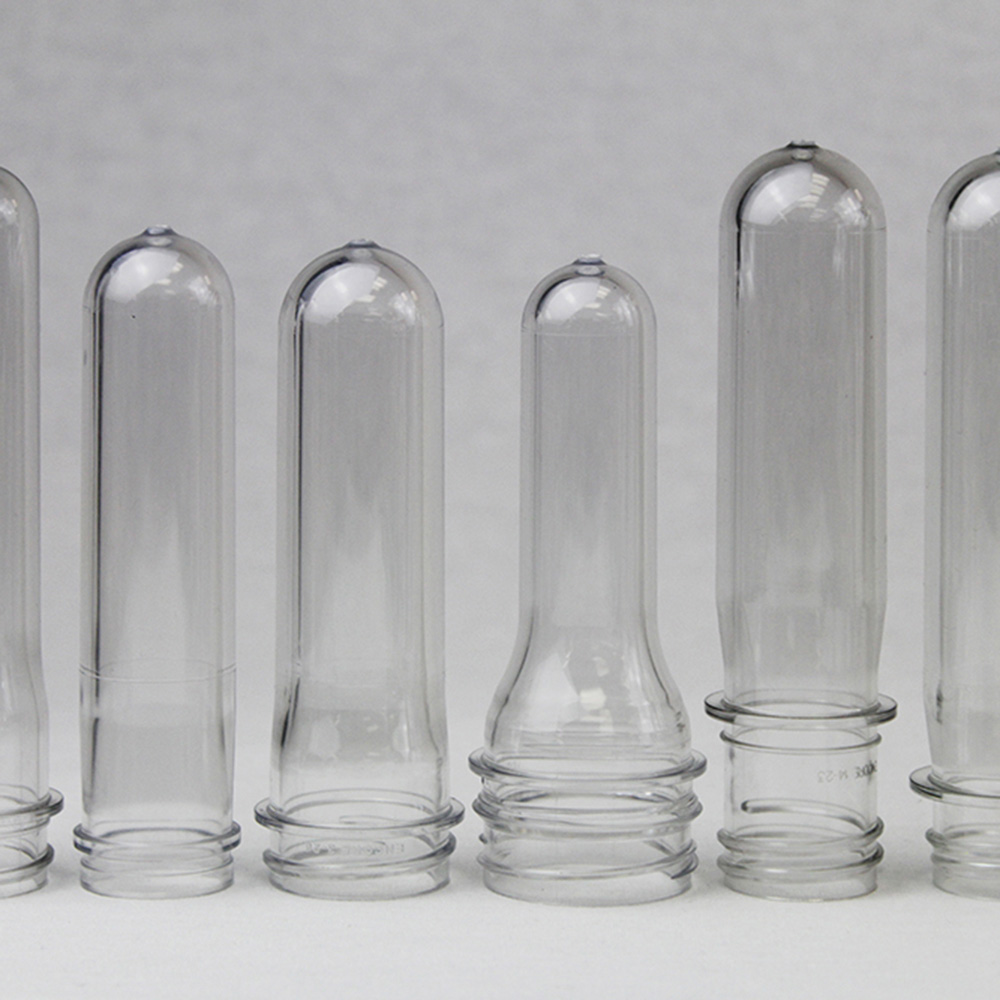
The global Polyethylene Terephthalate (PET) packaging industry is entering a pivotal decade of structural transformation and technological acceleration. Driven by surging global beverage consumption, stringent circular economy legislation, and rapid advancements in injection molding efficiency, the global PET preform mold market is projected to experience robust, sustained expansion from 2026 through 2032. As packaging converters race to lower unit manufacturing costs while meeting mandatory post-consumer recycled (PCR) resin targets, precision tooling architecture has become the decisive competitive advantage.
As a specialized PET preform mold manufacturer and turnkey tooling solution expert, apexmolds analyzes the macroeconomic catalysts, engineering innovations, and regional demand shifts defining the global PET preform tooling landscape through 2032.
1. Core Market Growth Drivers (2026–2032)
The demand for high-precision, multi-cavity PET preform molds is propelled by four primary industrial and regulatory shifts:
- Mandatory rPET Integration & Circular Economy Regulations: Global directives—including the EU Packaging and Packaging Waste Regulation (PPWR) and North American Extended Producer Responsibility (EPR) frameworks—mandate 25% to 50%+ recycled PET content in beverage containers. Processing high-percentage rPET requires specialized mold metallurgy, wider thermal processing windows, and enhanced micro-venting to manage lower intrinsic viscosity (IV) and higher volatile off-gassing.
- Aggressive Bottle Lightweighting & Neck Finish Standardization: To reduce resin expenditure and carbon footprints, converters are transitioning toward ultra-lightweight preforms and standardized short-neck finishes (such as GME 30.40 and PCO 1881). Producing thin-walled preforms without core shift or concentricity drift demands micron-level mold machining tolerances (±0.005 mm).
- High-Cavity Expansion & Cycle Time Compression: To maximize Overall Equipment Effectiveness (OEE) and reduce cost per thousand preforms, large-scale beverage bottlers are upgrading from legacy 24- and 32-cavity systems to 48-, 72-, 96-, and 144-cavity molds paired with high-conductivity cooling layouts.
- Diversification Beyond Carbonated Beverages: Rapid adoption of PET packaging in dairy, edible oils, cosmetics, pharmaceuticals, and wide-mouth food jars is driving demand for custom-engineered preform geometries and specialized hot runner gating configurations.
2. Regional Demand Analysis: Where Growth is Concentrated
Capital expenditure on new PET preform tooling exhibits distinct regional characteristics across global markets:
A. Asia-Pacific (APAC): The Volume and High-Speed Production Engine
Asia-Pacific represents the largest and fastest-growing market for PET preform molds through 2032. Rapid urbanization, expanding middle-class demographics, and massive bottled water and ready-to-drink (RTD) tea production across China, India, Vietnam, and Indonesia fuel continuous investments in high-cavity (72- to 144-cavity) high-output tooling lines engineered for uninterrupted 24/7 operation.
B. Europe: Sustainability, rPET Compatibility, and Retrofitting
European demand is dominated by regulatory compliance and sustainability retrofits. Converters in Germany, France, Italy, and Spain prioritize molds engineered specifically for 50% to 100% rPET processing, tethered-cap compatible neck rings, and energy-saving conformal cooling systems that cut chiller electricity consumption.
C. Middle East & Africa (MEA): Industrial Localization and Bulk Hydration
National water-security initiatives in the Gulf Cooperation Council (GCC) and expanding Fast-Moving Consumer Goods (FMCG) infrastructure across Sub-Saharan and North Africa are driving strong demand for both high-output water preform molds (28mm/30mm) and heavy-duty large-format molds (5L to 20L bulk water preforms ranging from 110g to 750g).
D. The Americas: Automation, Reliability, and Total Cost of Ownership (TCO)
In North and South America, packaging manufacturers focus on maximizing asset longevity and minimizing unscheduled downtime. Buyers demand self-locking taper designs, interchangeable neck inserts, and corrosion-resistant ESR stainless steels capable of exceeding 10 million cycles with minimal maintenance.
Global PET Preform Mold Market Matrix (2026–2032)
| Market Dimension | 2026–2032 Trajectory | Key Technical & Commercial Drivers |
|---|---|---|
| Dominant Cavity Configurations | 48, 72, 96, and 144 Cavities | Economies of scale, lower cost per preform, high-speed injection integration |
| Resin Processing Shift | 30% – 100% rPET / PCR Blends | PPWR compliance, brand sustainability pledges, virgin resin tax avoidance |
| Primary Tooling Innovations | 3D Conformal Cooling & Balanced Valve Gates | 15%–25% cooling time reduction, lower Acetaldehyde (AA) levels, zero gate stringing |
| Fastest-Growing Regions | Asia-Pacific & Middle East / Africa | Population growth, bottled water demand, domestic packaging localization |
3. How apexmolds Delivers Future-Ready PET Preform Tooling
Navigating the technical demands of the 2026–2032 market requires partnering with an engineering-driven mold manufacturer capable of optimizing every gram of resin and every tenth of a second in cycle time. At apexmolds, our turnkey PET preform mold solutions incorporate:
- Precision Rheological Hot Runner Balancing: Naturally balanced melt channels with individually PID-controlled nozzle heaters ensure uniform intrinsic viscosity (IV) retention, minimal Acetaldehyde (AA) generation, and cavity-to-cavity weight consistency within ±0.05 grams.
- Advanced Thermal Management & Conformal Cooling: By combining high-conductivity copper alloy core tips with hydrodynamically balanced turbulent cooling circuits, apexmolds reduces in-mold cooling times by up to 20% while eliminating gate crystallinity and haze.
- Premium Metallurgy & Modular Interchangeability: Utilizing vacuum-hardened S136 ESR stainless tool steel (48–52 HRC) and precision self-locking cylindrical-taper centering systems, our molds guarantee wall thickness eccentricity under 0.05 mm and effortless neck-finish conversions.
As the global PET packaging sector expands through 2032, investing in precision-engineered tooling is the most reliable pathway to higher throughput, lower resin consumption, and superior bottle performance. Contact the apexmolds engineering team to configure a customized PET preform mold solution tailored to your regional market and production targets.