
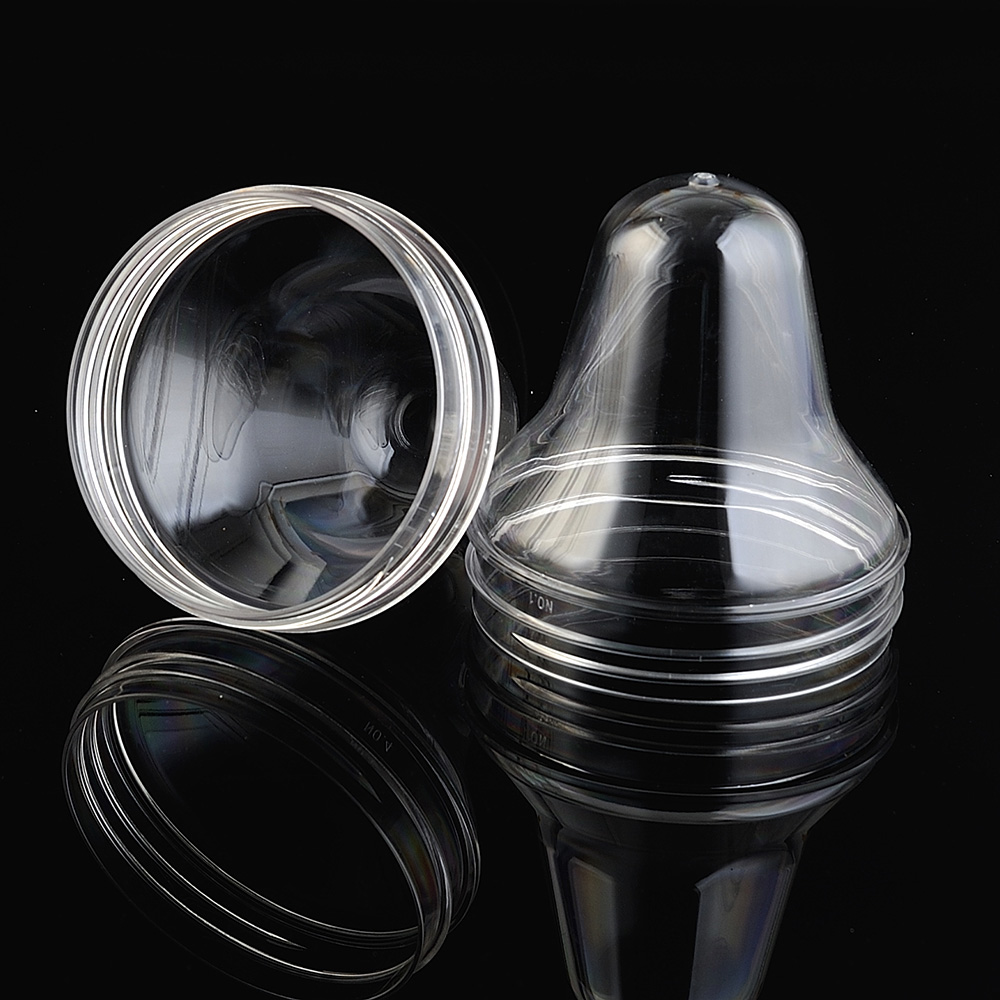
Case Study: Extending Preform Mold Service Life Through Proactive Maintenance Protocols
Written by the Aftermarket & Reliability Engineering Team at ApexMolds — Global Leaders in Precision High-Cavity PET & rPET Preform Tooling Solutions.
1. Executive Summary & Operational Challenge
A global beverage bottle manufacturer operating a 96-cavity PET preform mold line faced recurring unscheduled downtime, minor flash formation, and premature thread ring wear after 1.2 million cycles. The root cause was an ad-hoc, "run-to-failure" maintenance strategy that allowed micro-scale resin deposits, cooling water scaling, and alignment drift to compromise tooling integrity.
The client partnered with ApexMolds to implement a comprehensive Proactive Maintenance Protocol (PMP). By integrating standardized inspection intervals, ultrasonic cleaning routines, precision alignment checks, and predictive component reconditioning, ApexMolds extended the mold's operational lifespan beyond 3 million cycles while reducing overall lifecycle maintenance costs by 35%.
2. The Hidden Causes of Accelerated Mold Degradation
In continuous 24/7 high-cavity PET injection molding, subtle environmental and mechanical factors compound over time to degrade tool performance:
- Outgassing and Deposit Accumulation: Additives and volatiles from PET and recycled PET (rPET) form micro-films on vents and parting lines, restricting air evacuation and causing localized combustion (burn marks).
- Cooling Channel Scaling: Unconditioned cooling water leads to mineral deposits inside core and cavity cooling channels, reducing thermal transfer efficiency by up to 30% and lengthening cycle times.
- Parting Line Wear & Tonnage Imbalance: Thermal expansion combined with micro-alignment shifts concentrates clamping force on select cavities, accelerating wear on lock angles and split neck rings.
- Hot Runner Thermal Stress: Temperature cycling degrades nozzle tip seal rings, causing minor melt leakage and erratic gate shut-off timing.
3. The ApexMolds Proactive Maintenance Framework
ApexMolds designed a structured, multi-tiered maintenance protocol tailored specifically to high-cavity PET preform tooling architectures:
Tier 1: Daily & Weekly In-Line Preventive Audits
Routine checks executed during production stops focus on cleaning parting surfaces with solvent-free agents, inspecting neck ring splits for particulate buildup, and monitoring real-time cooling water delta-T ($ \Delta T $) across individual mold zones to detect early channel clogging.
Tier 2: Intermediate Preventive Servicing (Every 250,000 Cycles)
The mold stack undergoes scheduled bench inspection:
- Ultrasonic Cavity & Vent Cleaning: Removes stubborn resin residue without damaging optical mirror-polished surfaces ($ Ra < 0.05 \ \mu\text{m} $).
- Seal & O-Ring Replacement: Systematic replacement of high-temperature fluoroelastomer seals to prevent internal water-to-vacuum leaks.
- Guide Pin & Bushing Calibration: Measurement of wear limits using laser alignment equipment to guarantee preform wall thickness concentricity within $ \le 0.005 \text{ mm} $.
Tier 3: Major Refurbishment & Predictive Engineering (At 1.5M+ Cycles)
Instead of full mold replacement, ApexMolds performs targeted component reconditioning. Core inserts, neck rings, and valve gate pins undergo dimensional non-destructive testing (NDT). Worn neck ring inserts made of ESR S136 stainless steel are precision-reground or swapped, returning critical dimensions to original factory tolerances at a fraction of a new mold's cost.
4. Measurable Results & Field Performance Data
Following 18 months under the ApexMolds Proactive Maintenance Protocol, the client achieved significant operational and financial gains:
| Performance Metric | Reactive Strategy (Before) | ApexMolds Proactive Protocol (After) | Total Improvement |
|---|---|---|---|
| Total Tooling Lifespan | 1.2 Million Cycles (Severe Wear) | 3.1+ Million Cycles (Active Operation) | +158% Extended Life |
| Unplanned Downtime / Year | 210 Hours | 18 Hours | 91% Reduction in Stoppages |
| Preform Reject / Scrap Rate | 2.8% (Flash & Gate Defects) | 0.3% | 89% Reduction in Scrap |
| Annual Tooling Maintenance Cost | Baseline (High due to crisis repairs) | -35% Total OPEX | Lower total cost of ownership |
5. Strategic Value & Conclusion
Extending preform mold longevity requires more than superior tool steel like ESR S136—it requires a disciplined, engineering-backed maintenance methodology. By shifting from reactive troubleshooting to structured proactive maintenance, PET bottle producers can maximize equipment uptime, maintain strict preform weight tolerances, and dramatically lower their overall cost per thousand preforms.
Is your plant seeking to extend the working life of your existing preform mold inventory? Contact the tooling specialists at ApexMolds today to implement a customized maintenance protocol for your facility.