
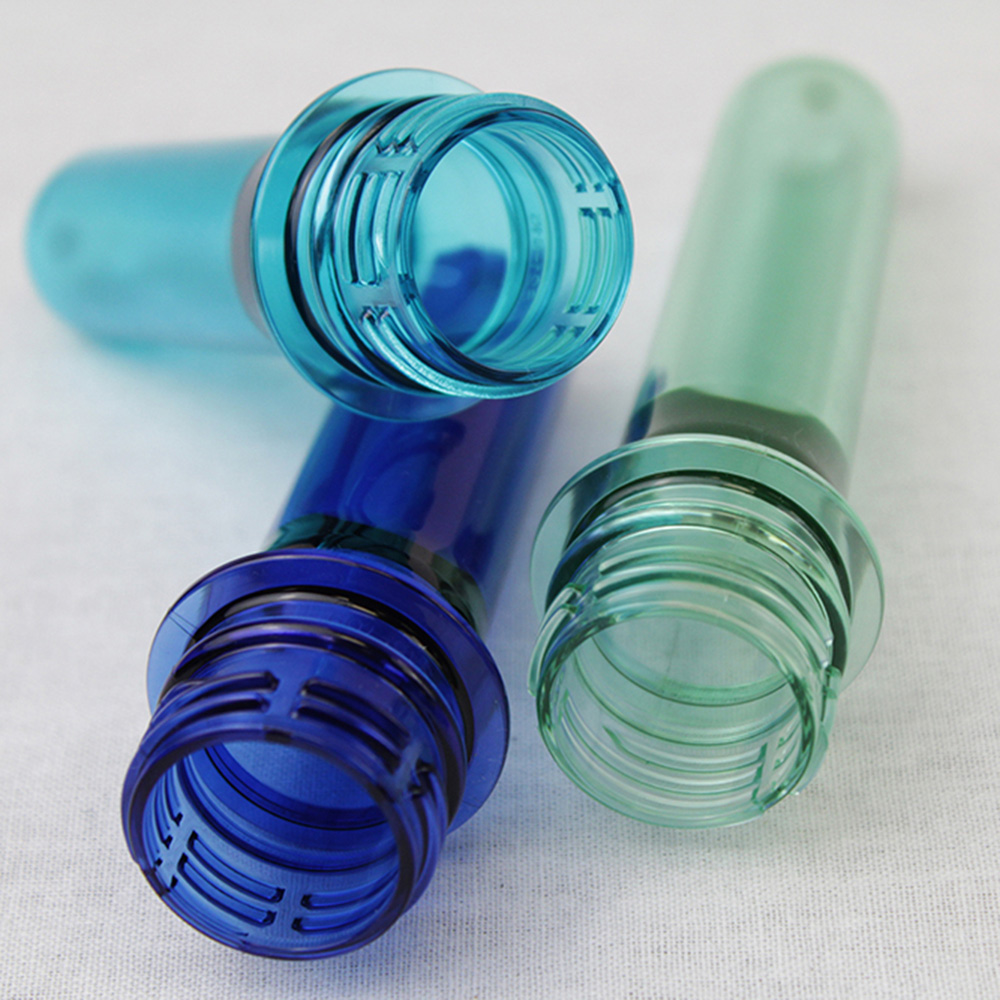
Case Study: Reducing In-Mold Cooling Time by 20% Through Advanced Cooling Layout Design
In high-speed PET preform manufacturing, the cooling phase dominates the injection molding cycle, accounting for up to 60% to 70% of total cycle time. As beverage and packaging converters demand higher throughputs and lower unit costs, reducing in-mold cooling time without inducing thermal stresses, haze, or wall thickness variations becomes the primary benchmark for advanced mold engineering.
As a specialized PET preform mold manufacturer and turnkey tooling solution expert, apexmolds recently completed a thermal optimization program for a high-volume bottle preform manufacturer. This case study details how we achieved a 20% reduction in in-mold cooling time through a completely re-engineered internal cooling circuit architecture, advanced metallurgy, and dynamic fluid dynamics optimization.
1. The Challenge: Thermal Bottlenecks in Thick-Wall PET Preforms
The client's baseline 48-cavity PET preform mold was producing 28-gram preforms for 1.5L beverage bottles. With a conventional cooling channel setup, the total cycle time stood at 13.8 seconds, with the in-mold cooling phase requiring 8.5 seconds. Key performance roadblocks included:
- Hot Spots at Core Tips & Neck Finish: Standard straight-drilled cooling channels failed to supply sufficient turbulent water flow to the thickest sections of the preform core tip and gate pad.
- Thermal Crystallinity & Optical Haze: Slow heat extraction near the core gate resulted in localized crystallization (white haze), compromising preform clarity and subsequent blow molding quality.
- Pressure Drops Across Mold Plates: Non-optimized cooling circuit splits created high pressure drops, reducing water velocity and creating cavity-to-cavity temperature variations.
2. Engineering Interventions by apexmolds
To eliminate thermal bottlenecks while maintaining micrometer-level dimensional stability, apexmolds redesigned the core and cavity cooling circuits using advanced Computational Fluid Dynamics (CFD) and FEA thermal simulations.
A. 3D Conformal Cooling Channels in Core & Cavity Inserts
Unlike standard spiral baffles, apexmolds implemented 3D conformal cooling channels manufactured via additive laser sintering. These channels continuously contour the exact internal profile of the preform body and neck ring, bringing high-velocity chilled water within millimeters of the polymer contact interface.
B. High-Conductivity Beryllium-Free Copper Alloy Tips
To accelerate thermal transfer at the critical injection point, we integrated high-conductivity copper alloy inserts into the core tips and gate inserts. This hybrid material configuration increased localized thermal conductivity by over 250% compared to conventional tool steel.
C. Hydrodynamically Balanced Multi-Circuit Water Manifolds
We re-architected the main mold plates with independent, hydrodynamically balanced cooling loops. By ensuring uniform water flow rate and maintaining a high Reynolds number (Re > 4000) across every single cavity, thermal variance across the 48 cavities was reduced to under ±0.5°C.
3. Performance Results & Data Comparison
The optimized 48-cavity preform mold was installed and tested on a high-speed PET injection molding machine equipped with post-mold cooling robotics. Below are the comparative performance metrics:
| Key Performance Indicator (KPI) | Standard Cooling Layout | apexmolds Advanced Layout | Performance Gain |
|---|---|---|---|
| In-Mold Cooling Time | 8.50 seconds | 6.80 seconds | 20.0% Reduction |
| Total Injection Cycle Time | 13.80 seconds | 11.50 seconds | 16.7% Cycle Acceleration |
| Preform Gate Crystallinity / Haze | 0.15% occurrence | 0.00% (Zero Haze) | Pristine Optical Clarity |
| Acetaldehyde (AA) Levels | < 3.2 ppm | < 2.5 ppm | 21.8% Quality Improvement |
| Annual Production Yield (8000 hrs) | 100 Million Units | 120 Million Units | +20 Million Units/Year |
4. Conclusion: Complete PET Preform Tooling Expertise
Slashing in-mold cooling time requires far more than lowering chilled water supply temperatures—it demands state-of-the-art thermal engineering, fluid mechanics, and high-precision mold manufacturing. By cutting cooling time by 20%, apexmolds empowered our client to increase annual capacity by 20 million preforms on their existing machine infrastructure.
As a professional PET preform mold manufacturer, apexmolds continues to push the boundaries of lightweight preform design, valve-gated hot runner efficiency, and high-speed cycle optimization for global packaging brands.