
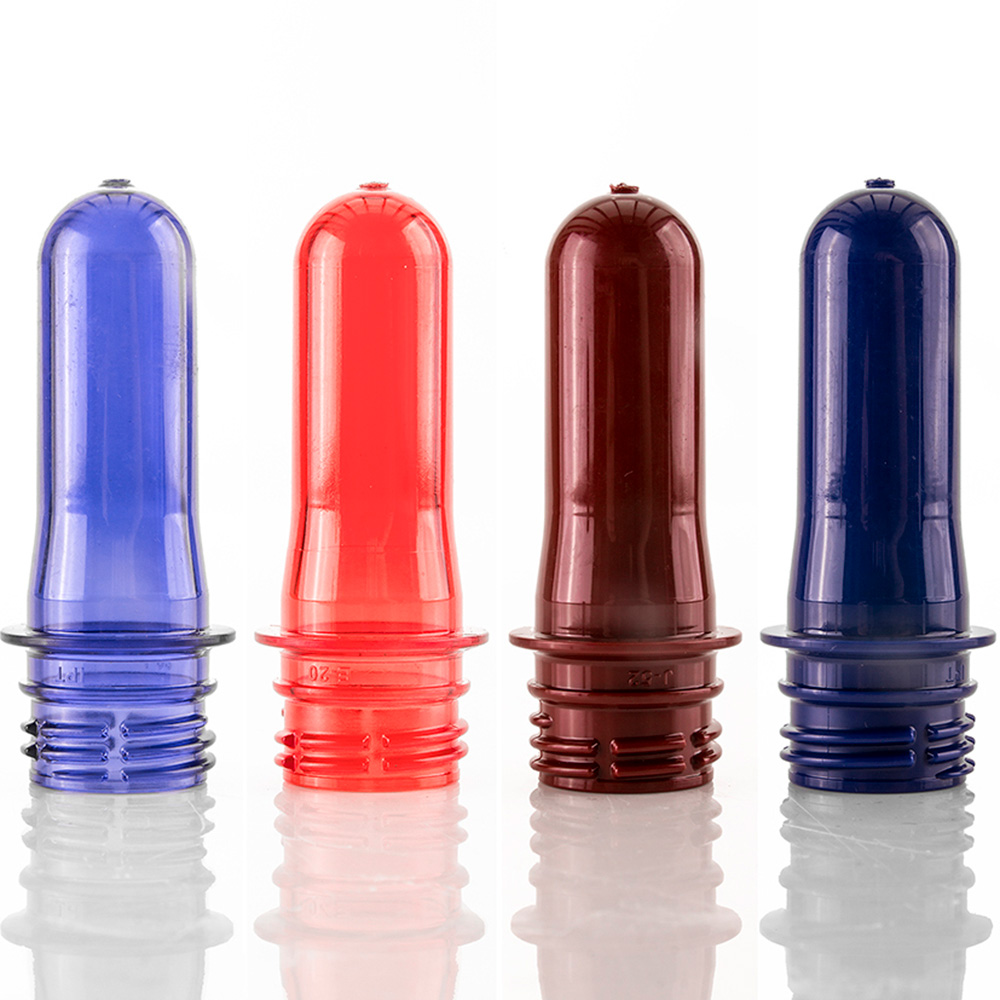
Case Study: Reducing Preform Weight by 12% Through Optimized Base Design and Cooling
Author: ApexMolds Tooling & Process Engineering Team | Published: November 2026
1. Executive Summary & Client Challenge
In high-volume bottled water and carbonated soft drink (CSD) manufacturing, raw PET resin accounts for up to 65% of total packaging production costs. Recently, a regional beverage bottler operating multiple 72-cavity injection lines approached ApexMolds—a specialist manufacturer of precision PET preform molds—with a clear mandate: reduce the weight of their 16.5g 600ml bottle preform by at least 10% without modifying their existing neck finish (PCO 1881) or investing in new stretch blow molding (SBM) machinery.
Initial attempts by the client's previous tooling vendor to thin the preform sidewall had resulted in base-cracking, excessive gate crystallinity (gate blush), and unstable material distribution during high-speed blowing. ApexMolds was commissioned to engineer a comprehensive tooling redesign focused on preform base geometry optimization and targeted gate-zone cooling.
2. Root Cause Engineering Analysis
Through Finite Element Analysis (FEA) of the client's existing preform and blown bottle profile, the ApexMolds engineering team identified where excess resin was trapped:
- Over-Engineered Hemispherical Base: The existing preform featured an overly thick, abrupt transition between the cylindrical body and the hemispherical gate dome. Because the base undergoes minimal biaxial stretching during blow molding, over 18% of the total PET mass remained locked in the unstretched bottle base.
- Gate-Zone Thermal Lag: Conventional straight cooling channels in the cavity plate terminated 14mm away from the valve gate tip. This thermal bottleneck caused slow solidification at the thickest cross-section of the base, forcing the operator to hold an extended 8.4-second cycle time while still risking spherulitic crystallization (cloudiness) around the gate.
- Unbalanced Stretch Ratio: Thinning the sidewall without adjusting the base radius caused the stretch rod to push cold, semi-crystalline PET into the bottle foot, resulting in stress whitening and burst failures under 4.0-bar carbonation pressure.
3. The ApexMolds Tooling & Cooling Solution
As dedicated preform mold solution experts, ApexMolds re-engineered the 72-cavity hot-half and cold-half tooling architecture around three core innovations:
A. Progressive-Taper Base & Dome Re-Profiling
Instead of stripping mass uniformly from the structural sidewall, our engineers redesigned the internal core tip and cavity gate contour. By introducing a smooth, progressive wall-thickness taper leading into a streamlined hemispherical dome, we redistributed 1.98g of redundant base resin upward into the natural stretch zone—allowing the blow molder to draw more usable surface area from less raw PET.
B. Localized High-Conductivity Gate Inserts with Conformal Cooling
To eliminate thermal lag at the base, ApexMolds replaced standard stainless steel gate pads with high-thermal-conductivity copper-alloy inserts paired with 3D-printed conformal cooling channels wrapping directly around the valve gate seat. This reduced the distance between the coolant medium and the molten PET gate from 14mm to just 3.5mm, extracting heat 40% faster at the thickest part of the base.
C. Precision Valve-Gate Thermal Isolation
We upgraded the hot runner manifold nozzles with dual-zone PID temperature controllers and titanium thermal-insulating gate bushings. This prevented heat bleed from the hot runner into the newly thinned preform base, preserving intrinsic viscosity (IV) and keeping acetaldehyde (AA) levels well below strict beverage industry thresholds.
4. Verified Production Results
Following Factory Acceptance Testing (FAT) and a 30-day continuous production validation run at the client's facility, the ApexMolds lightweighting system surpassed every engineering target:
| Key Performance Indicator (KPI) | Original 72-Cavity Tooling | ApexMolds Optimized System |
|---|---|---|
| Preform Unit Weight | 16.50 g | 14.52 g (12.0% Weight Reduction) |
| Base Center-of-Gravity Mass | 3.10 g (Excess unstretched mass) | 2.05 g (33.8% Base Mass Reduction) |
| Total Injection Cycle Time | 8.4 seconds | 6.9 seconds (17.8% Faster Output) |
| Gate Crystallinity / Blush Defect Rate | 1.8% reject rate | 0.05% (Optical clarity maintained) |
| Bottle Burst Pressure Resistance | 9.2 bar average | 9.5 bar average (Improved base geometry) |
At an annual output of 180 million bottles, the 1.98g per-unit reduction saved the client over 356 metric tons of virgin PET resin per year, while the 1.5-second cycle time reduction boosted annual line capacity by more than 21% without adding floor space or machinery.
5. Conclusion: Engineering Sustainable Profitability
True preform lightweighting requires far more than simply reducing wall thickness—it demands synchronized control over base geometry, biaxial stretch dynamics, and localized thermal extraction. Through precision metallurgy, simulation-driven design, and conformal cooling integration, ApexMolds empowers beverage producers to achieve aggressive resin savings without sacrificing bottle strength or line speed.
Looking to reduce preform weight or accelerate cycle times on your existing injection molding lines? Contact the engineering team at ApexMolds today for a comprehensive preform weight and cooling audit.
Keywords: Preform Weight Reduction, PET Preform Mold, Preform Base Design, Conformal Cooling Preform Mold, Lightweight PET Packaging, PET Preform Mold Manufacturer, High-Cavity Preform Mold, Valve Gate Hot Runner, Cycle Time Reduction, ApexMolds