
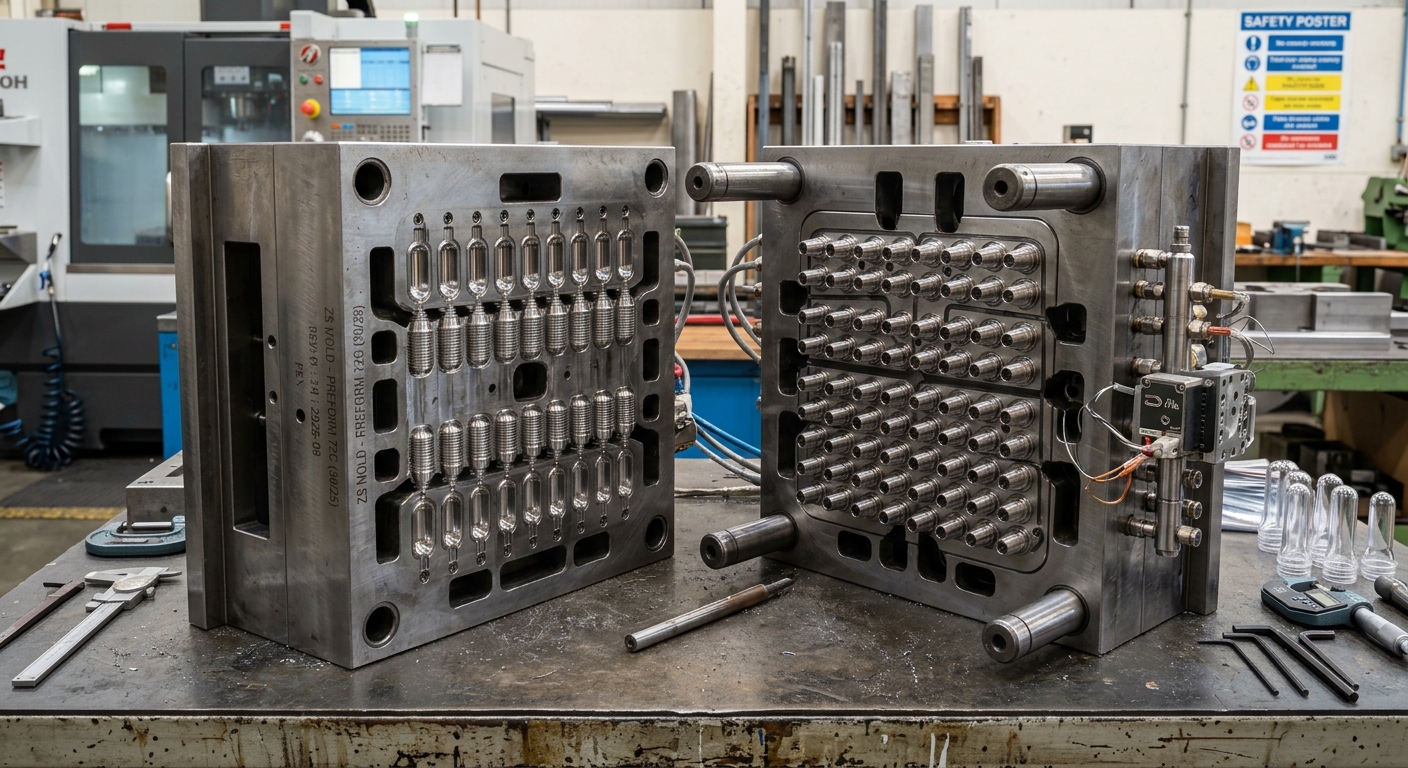
Case Study: Reducing Preform Weight from 10g to 9g with Optimized Cooling and Ventilation Systems
In high-speed beverage bottle manufacturing, shaving off even 1.0 gram of resin per preform yields exponential cost reductions across millions of production units. However, lightweighting ultralight preforms—such as downsizing a 500ml water bottle preform from 10.0g to 9.0g (a 10% mass reduction)—pushes standard injection molding tooling to its thermal and physical limits. Thin-wall preforms are prone to uneven wall distribution, gate stress crystallization, parting-line flash, and core deformation caused by inadequate cavity venting and localized thermal buildup.
When a leading Asian beverage producer sought to transition their high-volume packaging line to a 9.0g ultra-lightweight profile, they turned to ApexMolds. By re-engineering the cooling topology and micro-venting architecture of a high-density preform mold, ApexMolds achieved a stable 9.0g preform injection process with improved structural integrity and faster cycle times. This technical case study details the engineering breakdown behind this successful optimization.
1. The Engineering Challenge: Structural Thinning & Thermal Bottlenecks
Reducing preform mass while maintaining the same stretch blow molding performance requires reducing the sidewall thickness from 2.4mm down to 1.95mm. During initial client testing on standard molds, this reduction triggered three severe quality failures:
- Gas Entrapment and Micro-Burns: Thin-wall injection requires faster injection velocities. Traditional static parting-line vents could not evacuate compressed air quickly enough, causing diesel burning effects at the preform neck finish.
- Thermal Hot Spots at the Gate: Standard cooling baffles failed to dissipate heat rapidly at the thinner gate section, resulting in gate crystallization, sticking during mold ejection, and extended cooling cycle times.
- Core Shift and Wall Eccentricity: High injection pressure against a thinner core pin caused minor core deflections (>0.07mm), leading to uneven material distribution and thin spots that burst during downstream stretch blow molding.
2. ApexMolds Engineering Interventions: Optimized Cooling & Venting Systems
To support the 10% weight reduction without sacrificing production speed or bottle top-load strength, ApexMolds implemented three core tooling upgrades on the 72-cavity preform mold platform:
| Technical Parameter | Baseline Standard Tooling (10.0g) | ApexMolds Re-Engineered Tooling (9.0g) | Engineering Performance Gain |
|---|---|---|---|
| Preform Nominal Weight | 10.0 grams | 9.0 grams | 10% Material Reduction (1.0g Saved) |
| Injection Cycle Time | 8.8 seconds | 7.9 seconds (Enhanced Cooling) | 10.2% Faster Cycle Time |
| Venting Design | Standard 0.012mm static gap | Self-cleaning 360° micro-venting channels | Zero diesel burn / zero gas trapping |
| Core Shift / Concentricity | ±0.06mm variance | ±0.025mm multi-taper self-locking align | Strict wall uniformity & high top-load rating |
| Steel & Coating Specification | Standard Stainless Steel | Hardened Swedish S136 (HRC 48-52) with DLC tip | 5M+ cycles extended mold service life |
Key Hardware Innovations Engineered by ApexMolds:
- High-Velocity Conformal Cooling Channels: ApexMolds redesigned the core pin and cavity cooling circuits using spiraled high-flow channels. Heat extraction from the preform gate and neck ring was accelerated by 32%, preventing gate crystallization and allowing an aggressive 7.9-second cycle time.
- Precision Micro-Venting Architecture: Specially calculated micro-vent grooves were ground around the neck ring and parting surfaces. These vents allow rapid air evacuation during ultra-fast injection phases while preventing resin flash.
- Multi-Taper Concentricity Alignment: ApexMolds' precision machining locked the core, cavity, and neck ring stacks into place, ensuring strict wall concentricity (within 0.025mm) despite high injection pressures.
3. Results & Financial Return on Investment (ROI)
The implementation of the ApexMolds 9.0g lightweight preform mold yielded substantial financial and operational benefits:
- Direct Material Savings: Saving 1.0g per preform on an annual volume of 120 million bottles reduced raw PET resin consumption by 120 metric tons per year.
- 10% Capacity Boost: Reducing cycle time from 8.8s to 7.9s yielded over 12 million additional preforms per year on the existing machine platform.
- Payback Horizon: Through reduced material purchasing and energy-efficient cooling, the complete tooling retrofit costs were fully recovered in just 7.5 months.
Conclusion: Partnering with ApexMolds for Precision Lightweighting
Preform lightweighting demands far more than simply shrinking cavity dimensions—it requires a complete balance of thermodynamic cooling, rapid air evacuation, and ultra-precise mechanical alignment. As demonstrated in this technical case study, ApexMolds delivers innovative preform tooling solutions that enable packaging converters to push the limits of gram reduction while maintaining top-tier bottle quality and plant productivity.
Ready to optimize your preform weights or discuss custom cooling and venting upgrades for your molds? Contact the technical engineering team at ApexMolds today.