
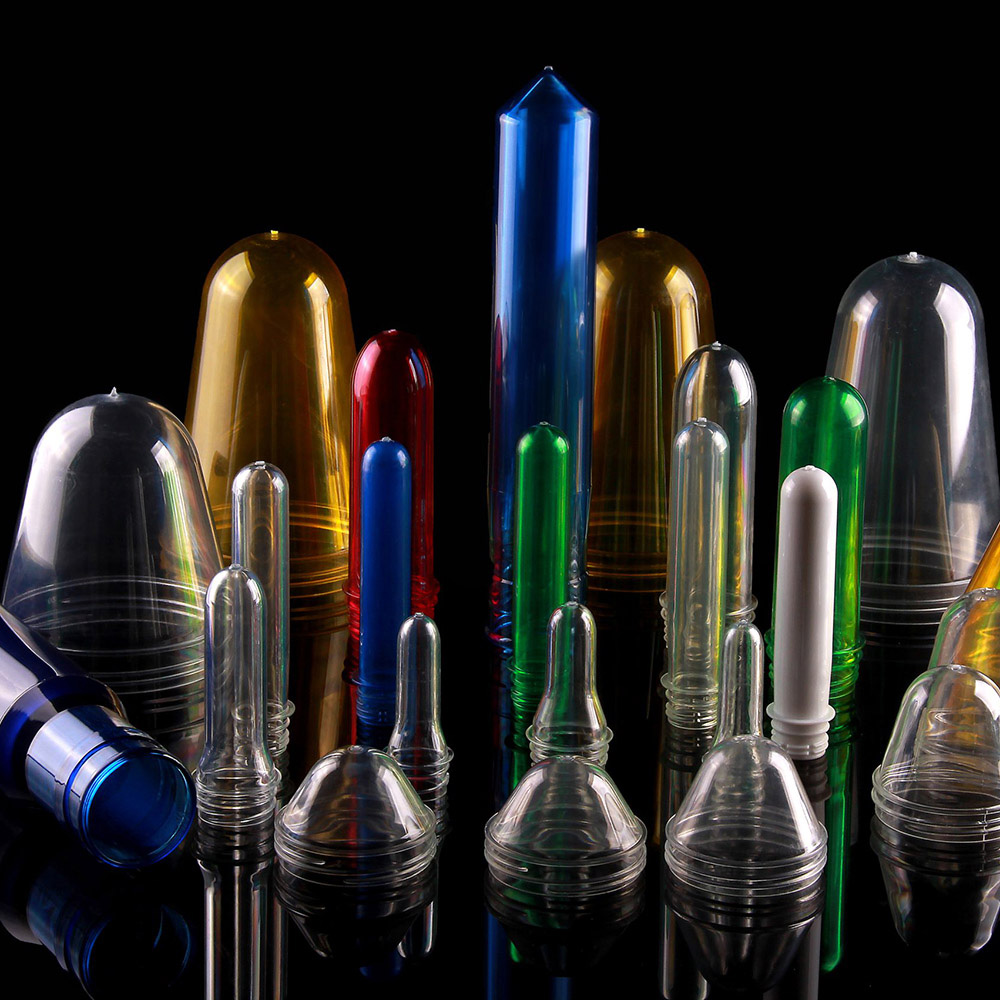
PET Packaging Growth in Southeast Asia, India, and Africa: Opportunities for High-Cavity Mold Suppliers
1. Why Southeast Asia, India, and Africa Are the Next High-Cavity Preform Frontier
The global PET packaging conversation has shifted. Mature Western markets are absorbed by recycled-content mandates, deposit-return infrastructure, and packaging regulation. The volume growth, meanwhile, is concentrated in three regions where per-capita packaged-beverage penetration is still climbing and where bottling capacity is being installed at a pace that requires tooling decisions to be made now, not after the filling line is commissioned[reference:0].
Southeast Asia, India, and Africa share a structural condition that directly favors high-cavity mold suppliers: beverage growth in these markets is not replacing glass or metal at the margin. It is building new PET-dedicated capacity. That means converters are specifying greenfield preform molding cells and replacing low-cavity legacy tools with 48-, 72-, 96-, and 144-cavity platforms designed around modern injection machines. The mold is no longer a downstream accessory; it is the capacity decision[reference:1].
1.1 Southeast Asia: Tropical Demand, Export Manufacturing, and Hot-Fill Complexity
Southeast Asia’s bottled water market alone was valued at approximately USD 42.5 billion in 2025, with projections reaching USD 46.1 billion in 2026 and USD 68.9 billion by 2031—a growth trajectory of roughly 8.4% per year[reference:2]. Thailand illustrates the tooling implication: the plastics and packaging sector generates over THB 500 billion annually, and demand for 72-cavity and 96-cavity hot-runner PET preform molds is surging among large-scale bottling plants[reference:3]. Thailand’s beverage market is valued at over USD 8 billion annually, and the aseptic and hot-fill segment—including coconut water, herbal drinks, and UHT products—is growing at 12% annually[reference:4].
This is not a simple water-bottle story. Hot-fill preforms for tropical beverage categories must withstand sterilization temperatures reaching 85°C to 95°C without thermal deformation or vacuum-panel collapse, which requires heat-set tooling and thermal conditioning capability that many low-cost mold builders cannot deliver[reference:5]. A high-cavity supplier entering Southeast Asia without hot-fill engineering depth will find itself excluded from the fastest-growing beverage sub-segment.
1.2 India: Scale, Lightweighting, and Resin Variability
India’s PET preform market is projected to expand from USD 2,145 million in 2025 to USD 3,201 million by 2031, a forecast CAGR of 6.90%[reference:6]. In volume terms, the market reached approximately 427,000 tonnes in 2025, up 8.3% year-on-year, and is expected to climb to 465,000 tonnes in 2026, with growth maintained around 9%[reference:7]. India consumed roughly 1.7 million tonnes of PET resin in 2023–24, with about 92% directed toward bottles, and the beverage application remains the core profit pool[reference:8][reference:9].
What makes India technically demanding for high-cavity preform molds is the combination of scale and variability. Converters face wide resin quality variation, fluctuating electrical power grids, and strict unit-cost pressure[reference:10]. A 96-cavity mold in India cannot rely on ideal incoming resin IV or perfect cooling water stability. It must be engineered with a wide processing window, energy-efficient hot runners, and high-concentricity core–cavity alignment so that cavity-to-cavity weight variation does not become the bottleneck on a line that is supposed to run continuously. Lightweighting campaigns add another layer: shorter neck finishes, reduced gram weights, and tighter dimensional tolerances are moving from premium differentiation to baseline expectation[reference:11].
1.3 Africa: Affordable Safe Water, Edible Oil, and Wide-Mouth Packaging
Africa’s PET market is smaller in absolute tonnage but strategically important for mold suppliers because the packaging formats are broader. The African PET market is estimated at 615.22 kilotons in 2025, rising to 645.73 kilotons in 2026 and forecast to reach 822.57 kilotons by 2031 at a 4.96% CAGR[reference:12]. The Middle East and Africa plastic bottles market was valued at USD 3.85 billion in 2025 and is projected to reach USD 5.95 billion by 2035, a 5.0% CAGR[reference:13]. PET plausibly represents 55–70% of food-grade bottle units in Africa because it combines low weight with acceptable barrier and mechanical performance, and demand is estimated to grow 5–8% annually through 2035[reference:14].
The African mold requirement is not a carbon copy of Southeast Asia. Bottled water and affordable safe drinking water drive narrow-neck volume, but edible oil and food storage jars create sustained demand for wide-mouth preforms, including 110 mm neck profiles for 70–90 g preforms[reference:15]. Major bottlers are also investing in line-speed and cold-fill capability upgrades in Southern Africa, which raises the bar for tooling reliability and maintenance intervals in environments where local technical support may be limited[reference:16]. A supplier that can deliver a single engineering platform covering both narrow-neck water preforms and wide-mouth food preforms has a meaningful advantage over suppliers who only quote beverage-standard tools.
| Region | Headline demand signal | Dominant high-cavity mold challenge | APEX engineering response |
|---|---|---|---|
| Southeast Asia | Bottled water USD 42.5 B (2025) → USD 68.9 B (2031); hot-fill beverages growing 12%/yr in Thailand[reference:17][reference:18] | Elevated ambient temperature, warm cooling water, hot-fill heat-set stability up to 95°C | Conformal cooling + BeCu inserts; hot-fill heat-set tooling with multi-zone thermal control |
| India | PET preform market USD 2.15 B (2025) → USD 3.20 B (2031), 6.90% CAGR; volume +9% in 2026[reference:19][reference:20] | Resin IV variability, power fluctuation, aggressive lightweighting, unit-cost pressure | Wide-window valve-gate hot runner; ≤0.10 mm eccentricity over 100 mm; IC-programmable zone control |
| Africa | PET 615 kt (2025) → 823 kt (2031), 4.96% CAGR; PET 55–70% of food-grade bottles[reference:21][reference:22] | Harsh plant conditions, limited maintenance infrastructure, wide-mouth edible-oil and food-jar formats | S136 / DIN 1.2316 corrosion-resistant steel; wide-mouth neck insert capability up to 110 mm |
2. The Technical Bar: What Separates a High-Cavity Mold Supplier from a Cavity Counter
It is easy to advertise 96 or 144 cavities. It is far harder to make every cavity produce an indistinguishable preform after two million cycles in a plant where the cooling water is warmer than the mold designer assumed and the resin IV shifts between deliveries. The regional growth described above creates demand, but it also raises the technical threshold. The following engineering capabilities determine whether a high-cavity mold becomes a production asset or a maintenance liability.
2.1 Cooling Is the Cycle Time—and in Hot Climates, It Is Also the Quality Variable
Cooling accounts for up to 80% of total cycle time in PET preform injection molding[reference:23]. In high-ambient-temperature regions, the cooling system is not merely a productivity lever; it is the primary defense against preform deformation, optical haze, and dimensional drift. A mold that performs acceptably in a temperate plant can produce elevated gate haze and inconsistent wall thickness when the incoming cooling water is warmer and the ambient humidity is higher.
APEX incorporates conformal cooling channel designs with strategic beryllium copper insert placement in critical heat zones, ensuring uniform cooling rates throughout the preform wall section and eliminating hot spots that create internal stress and optical distortion[reference:24]. Independent and effective water cooling on the cavity, neck insert, core, and plates further shortens cycle time while maintaining preform quality[reference:25]. For Southeast Asian and African converters, this thermal architecture is the difference between a quoted cycle time and a sustained cycle time.
2.2 Balanced Hot Runner and Valve-Gate Control: The Cavity-Consistency Engine
At high cavity counts, the hot runner is the quality bottleneck. A two-degree melt difference between cavities is enough to push preform weight outside tolerance[reference:26]. The solution is not a larger manifold; it is a thermally balanced manifold with individually optimized heating zones and valve-gate nozzles that give each cavity its own temperature control loop.
APEX high-cavity molds use balanced hot runner manifold systems with individually optimized heating zones and precisely engineered gate geometries, delivering uniform melt distribution to every cavity and minimizing gate vestige and stringing[reference:27]. The valve-gate hot runner systems use independent nozzle temperature control to eliminate gate stringing and blush, while IC-programmable temperature controllers maintain pressure balance across all cavities to keep acetaldehyde (AA) levels and dimensional uniformity within specification[reference:28][reference:29]. This is the architecture that allows a 96-cavity tool to behave like 96 individually controlled molding cells rather than one large, compromise-prone cavity.
2.3 rPET-Ready Engineering Is No Longer Optional
Recycled-content mandates are no longer a European or Latin American peculiarity. South Africa’s extended producer responsibility rules effective from May 2025 mandate rising recycled-content targets, Kenya has introduced tiered EPR fees with minimum rPET percentages, and a draft continental ARSO standard seeks to harmonize food-contact clearances for rPET[reference:30]. Even where regulation is still developing, multinational brand owners are pressing converters for rPET capability as a condition of supply.
Processing rPET in high-cavity molds introduces two coupled problems: fluctuating intrinsic viscosity (IV) and elevated acetaldehyde generation. Residual contaminants and recycled polymer blends melt at varying temperatures, increasing the risk of thermal degradation and AA formation in stagnant hot runner zones[reference:31]. A mold that was tuned for virgin PET will drift on weight and taste/odor performance when the rPET ratio changes.
APEX engineers rPET capability into the thermal and flow architecture rather than treating it as a post-delivery adjustment. The company’s high-cavity rPET platform maintains weight tolerances within ±0.1 g across all cavities even with varying IV raw feeds, using closed-loop thermal control and balanced melt delivery to suppress AA generation and discoloration[reference:32]. For converters in India and Africa who expect rPET adoption to accelerate through the late 2020s, this is a tooling decision that protects the mold’s useful life against a moving feedstock target.
2.4 Metallurgy and Service Life: The Total Cost of Ownership Denominator
High-cavity molds are long-lived assets. A 144-cavity tool running a 15-second cycle can produce more than 5.7 million preforms per 24-hour day in theoretical cavity throughput, and real-world annual output easily reaches hundreds of millions of preforms. Tooling that requires frequent polishing, gate replacement, or cavity maintenance destroys the economics that justified the high cavity count in the first place.
APEX critical components are manufactured from Swedish imported S136 steel for corrosion resistance and polishability, with mold bases made from imported P20 steel and electroplating treatment to extend service life[reference:33]. Heat treatment is performed in German-sourced vacuum furnaces, achieving consistent hardness of HRC 45–48 across wear parts and reliable performance beyond 2 million molding cycles[reference:34]. Genuine Hotset (Germany) heaters are paired with intelligent temperature controllers for precise thermal management[reference:35]. This metallurgical specification is particularly relevant in Africa and parts of Southeast Asia, where abrasive water quality, limited maintenance infrastructure, and harsh operating environments can shorten the life of a less robust tool[reference:36].
| Engineering dimension | APEX specification / approach | Why it matters in SEA, India, and Africa |
|---|---|---|
| Cavity range | 32 to 144 cavities; 48, 72, and 96 standard high-cavity platforms[reference:37][reference:38] | Matches the scale-up curve from regional bottler to multinational line speed |
| Cavity surface | SPI A1 mirror finish; single-digit micron tolerance[reference:39] | Preserves water-clarity preforms without downstream optical rejection |
| Eccentricity / weight control | ≤0.10 mm over 100 mm preform length; weight variation under 0.3 g; rPET platform ±0.1 g[reference:40][reference:41] | Prevents wall-thickness drift that causes blow-molding rejects and lightweighting failures |
| Cooling | Conformal cooling channels; BeCu inserts at critical heat zones; independent water circuits for cavity, neck, core, plates[reference:42][reference:43] | Compensates for elevated cooling-water temperature and high ambient humidity |
| Hot runner | Valve-gate, individually controlled heating zones; IC-programmable temperature controllers[reference:44][reference:45] | Maintains cavity-to-cavity AA and dimensional consistency under variable resin IV |
| Neck finish flexibility | PCO 1810, PCO 1881, 29/25, 30/25, custom short-height, wide-mouth up to 110 mm[reference:46][reference:47] | One engineering partner covers water, CSD, hot-fill, edible oil, and food-jar portfolios |
| Machine compatibility | Husky HyPET, Netstal PET-Line, and mainstream European/Chinese platforms[reference:48][reference:49] | Reduces retrofit risk and protects existing injection asset investments |
3. The High-Cavity Decision: Output, Cost per Preform, and the ROI Trap
The case for high-cavity molds is often presented as a simple output calculation: more cavities equal more preforms per cycle equal lower cost per preform. In practice, the ROI of a 96- or 144-cavity mold depends on whether the mold can run at its designed cycle time without cavity-to-cavity quality intervention. A 144-cavity tool that requires manual weight adjustment or frequent gate maintenance can underperform a well-balanced 72-cavity tool on effective OEE.
Three variables determine whether the high-cavity investment translates into lower cost per preform in Southeast Asia, India, and Africa:
- Effective cycle time, not nameplate cycle time. Cooling efficiency and hot runner balance determine whether the mold can sustain its quoted cycle across a full shift. In tropical plants, a mold with inadequate cooling margin will gradually lengthen cycle time as cooling water temperature rises through the day.
- Scrap rate across the cavity set. A single drifting cavity in a 96-cavity tool can generate enough rejects to erase the labor and energy savings of the entire platform. Cavity-to-cavity consistency is therefore a direct financial variable, not only a quality variable.
- Changeover and resin flexibility. Converters who switch between virgin PET, rPET blends, and different preform weights need a hot runner and thermal control system that can be re-profiled without mechanical modification. A mold engineered only for one resin and one IV window becomes a stranded asset as recycled-content mandates tighten.
APEX approaches the high-cavity decision as a tooling ROI problem rather than a catalog selection. The company’s designs prioritize balanced hot runner feeding, broad machine compatibility, and runout control specifically because these are the variables that determine whether a 72-, 96-, or 144-cavity platform achieves its theoretical output in a real plant[reference:50]. Every mold undergoes pre-delivery testing including actual preform sampling, dimensional verification of all cavity-to-cavity variations, optical clarity inspection, and certification documentation[reference:51]. For a converter commissioning a new line in Vietnam, Nigeria, or Gujarat, that pre-delivery validation is the first line of defense against a slow and expensive ramp-up.
4. Why APEX Molds Is Positioned as a Preform Mold Solution Partner
APEX Molds has specialized in PET preform molds for over 18 years, serving beverage, edible oil, water, and cosmetic packaging producers with high-cavity tooling built around precision engineering, hot runner design, and thermal balance[reference:52]. The company’s positioning is deliberately not “mold maker.” It is PET preform solution partner: from thermal balancing in hot runners to optimized cooling geometry, from valve-gate systems to multi-stage taper alignment, APEX helps customers achieve shorter cycle times, lower scrap rates, and higher per-machine output[reference:53].
For converters and brand owners evaluating high-cavity mold suppliers for Southeast Asia, India, or Africa, this solution-partner model has three practical consequences:
- Regional application engineering, not catalogue quoting. A 96-cavity water preform mold for Indonesia and a 96-cavity edible-oil wide-mouth mold for West Africa are not the same tool. APEX engineers the thermal profile, neck insert, and cooling architecture around the target product, resin, and plant conditions.
- rPET and sustainability readiness built in. As EPR rules and brand-owner recycled-content targets expand across Africa and Asia, APEX high-cavity platforms are engineered to maintain weight and AA control under variable IV feed, protecting the mold investment through the rPET transition[reference:54].
- Validation before shipment, not after installation. Every APEX preform mold undergoes actual preform sampling on injection molding equipment, dimensional verification across all cavities, and optical clarity inspection under standardized lighting conditions before delivery[reference:55]. This reduces commissioning risk in markets where on-site engineering support may be less readily available.
5. Frequently Asked Questions (FAQ)
Why is high-cavity mold capacity critical for PET packaging growth in Southeast Asia, India, and Africa?
Bottled water and beverage demand in these regions is expanding faster than mature Western markets, while unit economics remain highly sensitive to cycle time and scrap rate. High-cavity molds, typically 48 to 144 cavities, amortize tooling investment across millions of preforms and reduce cost per preform, making them the preferred configuration for converters scaling bottling capacity.
What technical features should a high-cavity preform mold have for tropical and emerging markets?
The mold must compensate for elevated ambient temperatures and variable cooling water quality with conformal cooling channels and beryllium copper inserts, maintain cavity-to-cavity weight consistency through a balanced valve-gate hot runner with independent zone control, and use corrosion-resistant mold steel such as S136 or DIN 1.2316 for long service life under demanding plant conditions.
Can high-cavity preform molds run rPET without sacrificing quality?
Yes, but only when the hot runner and thermal control system are engineered for rPET variability. APEX high-cavity molds maintain weight tolerance within ±0.1 g across cavities even with fluctuating IV feed, using closed-loop PID nozzle temperature control and balanced melt delivery to suppress acetaldehyde generation and discoloration.
How does APEX Molds support converters entering Southeast Asia, India, or Africa?
APEX Molds acts as a preform mold solution partner rather than a catalog tooling vendor. The company provides cavity configurations from 32 to 144, compatibility with Husky and Netstal platforms, pre-delivery cavity-by-cavity dimensional and optical validation, and engineering support for neck finishes including PCO 1810, PCO 1881, 29/25, 30/25, and wide-mouth profiles for edible oil and food jars.
What cavity count is right for a new bottling line in an emerging market?
There is no universal answer, but the decision should be driven by expected annual volume, injection machine clamp and shot capacity, and the plant’s ability to maintain cooling water stability. 48-cavity tools suit regional converters with moderate volume and multi-product flexibility; 72- and 96-cavity platforms are the mainstream choice for dedicated water and CSD lines; 144-cavity tools are appropriate only when the downstream filling and logistics chain can absorb the output and the plant has the maintenance capability to sustain cavity-level consistency.
Engineering a high-cavity preform platform for Southeast Asia, India, or Africa?
APEX Molds reviews your product portfolio, resin strategy, machine platform, and plant conditions before recommending cavity count, hot runner architecture, cooling design, and neck-finish tooling. The objective is not the highest cavity number in a proposal—it is the mold that runs at its designed cycle, at its designed weight, for the life of the line.
Contact APEX Molds for a preform mold engineering review.
6. Conclusion: The High-Cavity Opportunity Belongs to the Thermally Competent
Southeast Asia, India, and Africa will absorb a disproportionate share of new PET preform capacity through the late 2020s and early 2030s. The headline numbers are persuasive: bottled water growth near 8.4% annually in Southeast Asia, India’s preform market moving from USD 2.15 billion to USD 3.20 billion, and Africa adding over 200 kilotons of PET demand by 2031[reference:56][reference:57][reference:58]. But the mold supplier that benefits from this growth will not be the one that simply quotes the most cavities. It will be the one that can demonstrate, with thermal data, cavity-level weight verification, rPET engineering, and metallurgical discipline, that every cavity in a 96- or 144-cavity tool will produce a preform indistinguishable from the first cavity—in a hot plant, on variable resin, for years of continuous operation.
That is the engineering standard APEX Molds builds to. As a PET preform mold solution partner with 18+ years of high-cavity manufacturing experience, APEX combines S136 metallurgy, conformal cooling with BeCu inserts, individually controlled valve-gate hot runners, and pre-delivery cavity-by-cavity validation to turn regional PET growth into reliable converter capacity[reference:59][reference:60]. The opportunity is real. The technical bar is equally real. Mold suppliers who clear that bar will define the next decade of PET packaging in the fastest-growing markets in the world.