
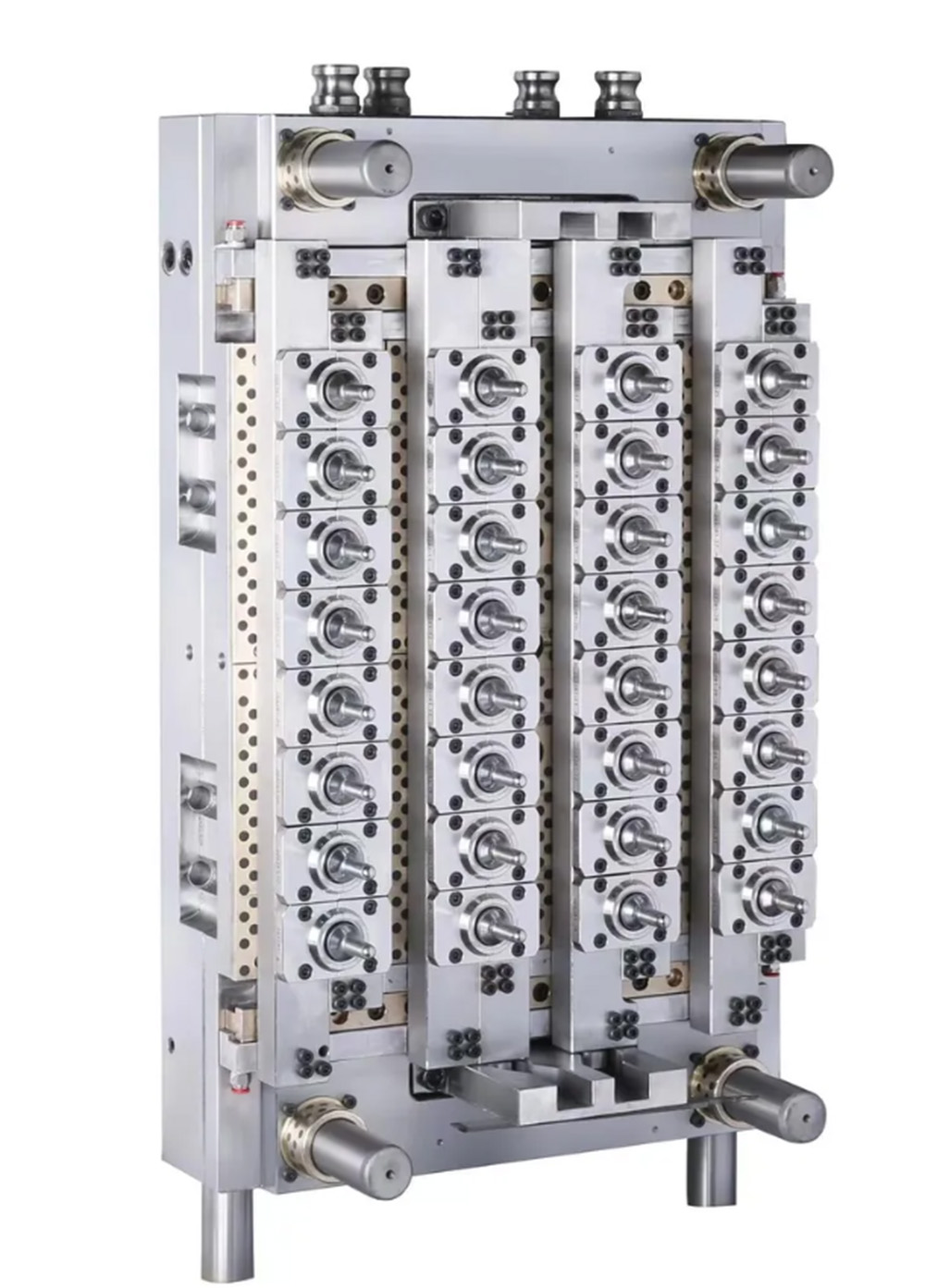
Processing High Percentages of rPET in Preform Molds: Challenges and Engineering Solutions
As global sustainability mandates tighten and global brands commit to circular economy goals, packaging converters are under increasing pressure to integrate up to 50%, 75%, or even 100% Recycled Polyethylene Terephthalate (rPET) into their preform production lines. However, substituting virgin PET resin with high percentages of post-consumer recycled flakes or pellets introduces severe processing variables into injection molding systems.
At ApexMolds, we engineer tailored tooling solutions that allow manufacturers to process high-percentage rPET flakes and PCR resins without compromising cycle times, cavity balancing, or preform clarity. This technical whitepaper breaks down the rheological behavior of rPET and details the specialized mold design features developed by ApexMolds to overcome these challenges.
1. The Processing Challenges of High-Percentage rPET Resin
Unlike homogeneous virgin PET, post-consumer rPET exhibits wider molecular weight distributions and thermal histories. When injected into multi-cavity molds, these material inconsistencies manifest in four major production bottlenecks:
- Intrinsic Viscosity (IV) Fluctuation: Inconsistent IV causes melt viscosity shifts during injection, leading to uneven cavity filling, flash on the parting line, or short shots in outer cavities.
- Higher Contaminant and Volatile Outgassing: Residual contaminants, organic compounds, and moisture in rPET generate elevated gas volumes during plasticization, clogging standard air vents and causing black spots or burn marks.
- Increased Shear Sensitivity & AA Generation: Recycled resin is prone to thermal degradation under high shear stress, elevating Acetaldehyde (AA) levels and yellowing the preform structure.
- Abrasive Wear on Molds: Micro-particles and fine mineral debris present in PCR flakes cause accelerated wear on valve pins, nozzle tips, and cavity gates.
2. ApexMolds Tooling Solutions for Seamless rPET Processing
To eliminate process instability and extend tool life, ApexMolds incorporates specialized metallurgical, mechanical, and hot runner modifications into our high-cavity preform mold platforms.
| Engineering Challenge | Standard Virgin PET Tooling | ApexMolds rPET-Optimized Engineering Solution | Production Impact |
|---|---|---|---|
| Viscosity Shifts & Flow Imbalance | Fixed flow-bore hot runner channels | Generous, low-shear manifold flow channels with dynamic valve-gate control | Prevents shear heating & balances multi-cavity filling |
| Volatile Gas Trapping | Standard parting line venting (0.015mm) | Enhanced self-cleaning micro-venting and vacuum-assisted venting ports | Eliminates burn marks, black spots, and gas entrapment |
| Abrasive Gate & Core Wear | Standard hardened tool steel inserts | Titanium Nitride (TiN) / DLC coated gates with Swedish S136 stainless steel cores | Extends tool life beyond 5 million cycles with PCR flake |
| Melt Temperature Control | Single-zone nozzle heating blocks | Independent PID closed-loop heating zones at each nozzle tip | Maintains melt temperature within ±0.5°C to protect resin IV |
Key Hardware Upgrades for rPET Preform Production:
- Low-Shear Valve Gate Nozzles: Re-engineered nozzle tip geometries reduce shear stress during the injection phase, minimizing IV drop and preventing yellow tinting in clear bottle preforms.
- Hardened Core & Cavity Coatings: Advanced Physical Vapor Deposition (PVD) coatings protect critical sliding surfaces and gate areas from abrasive micro-contaminants common in post-consumer recycled flakes.
- Optimized Conformal Cooling: Intensive cooling around the gate and neck finishes ensures uniform crystallization rates, keeping preform side walls perfectly transparent even with varying rPET feedstocks.
3. Field Results: Stable Production and High Efficiency
Converters implementing ApexMolds rPET-dedicated tooling solutions achieve consistent, high-yield manufacturing results:
- Up to 100% rPET Processing Capabilities: Complete stability when running blend ratios ranging from 25% to 100% PCR content.
- Zero Maintenance Downtime from Vent Clogging: Micro-venting geometry drastically reduces gas residue buildup, extending continuous production runs between scheduled cleanings.
- Uncompromised Cycle Times: Retains fast cycle performance equivalent to virgin PET production through optimized heat transfer and fast cooling.
Conclusion: Partnering with ApexMolds for Sustainable Packaging Success
Scaling up recycled PET usage requires tooling engineered specifically to handle material inconsistency, outgassing, and abrasive wear. ApexMolds delivers end-to-end rPET preform mold solutions that empower bottle manufacturers to meet strict environmental targets while maintaining exceptional productivity and preform quality.
Looking to upgrade your preform molds for high-percentage rPET or 100% PCR production? Contact the engineering specialists at ApexMolds today for tailored technical guidance.